8 min readPaid MediaCreative
Just Paid £267 for You to Hear This: The Receipt-Confession Playbook
Artists are posting their ad receipts as the joke: “Just paid £267 for 100k people to hear my song. You were bought.” Why it works and how to run it.
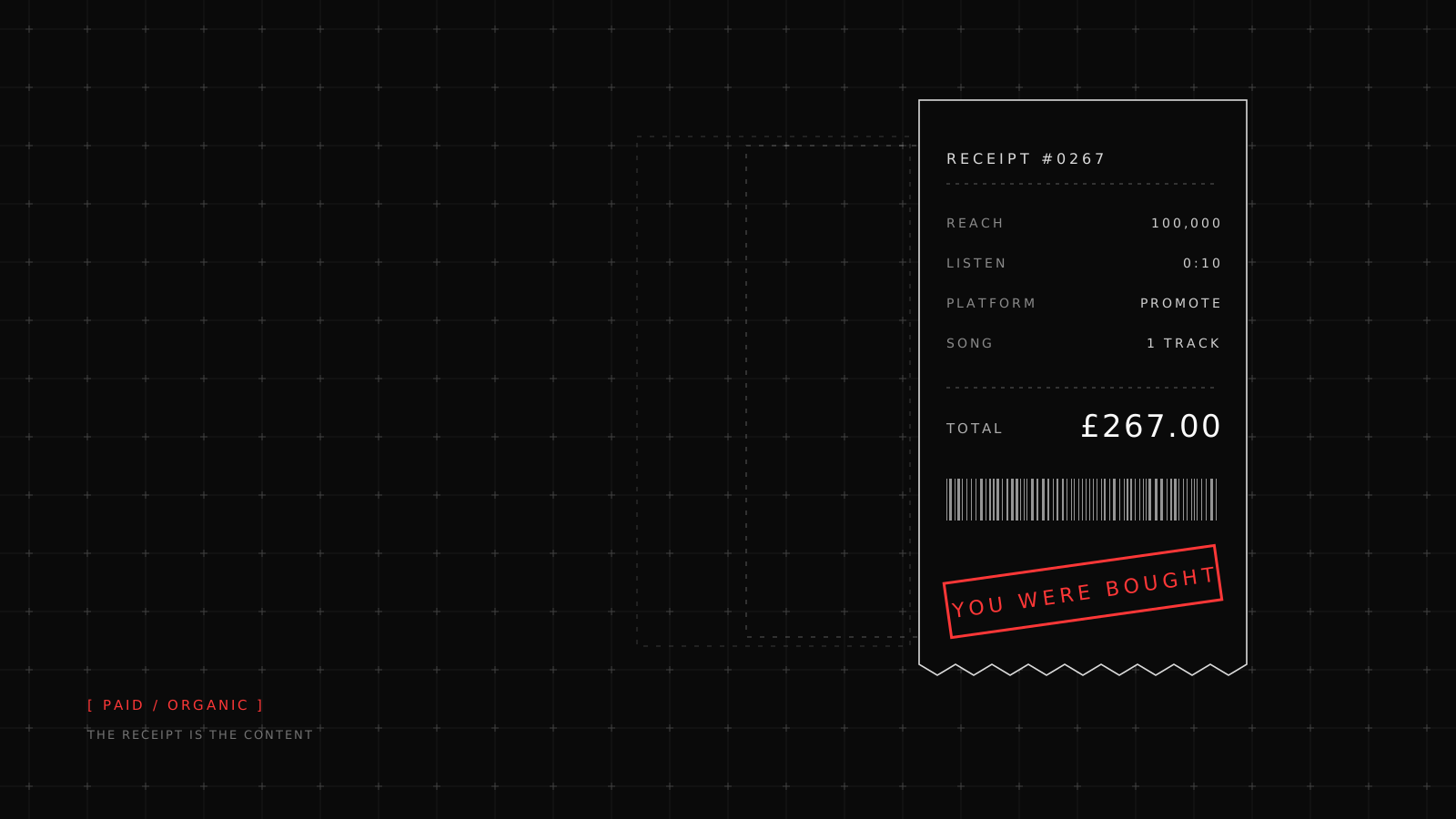
Artists are turning their ad invoices into the punchline. Post the receipt, make the viewer the joke, and watch the organic reach outrun the paid reach. Here’s how the format works, what the numbers say, and how to run it this week.
[ 01 ]Key takeaways
- The format is one sentence: an oddly specific ad spend (“just paid £267 for 100k people to hear my song”), a detail that deflates it (“for 10 seconds”), and a kicker (“you were bought”).
- At least 13 creators ran near-identical versions between September 28 and October 11, 2026, before any mainstream coverage of the trend.
- Small accounts get the lift. An artist with 13.4K followers drew 1,808 likes on his confession, against 105 to 410 on his other recent reels. That’s 4 to 17 times his baseline.
- The smallest buy won biggest. £7.58 for 3,000 views pulled 4.5K likes and 210 comments on an account with 11K followers.
- It’s the opposite of payola. The press is covering hidden payments to influencers. This format volunteers the payment, and makes the disclosure the content.
- Odd numbers are the proof. £103, £137.50, £267 don’t read like copy. They read like receipts.
[ 02 ]The short version
Indie artists found a way to make paid reach cool: tell everyone you bought it. We run paid-to-organic campaigns for artists at Crowd Control Digital, and this is the sharpest organic creative built on top of paid media we’ve seen this year. It’s simple enough to run this week, specific enough to copy exactly, and early enough that most of the industry hasn’t named it yet.
[ 03 ]What is the receipt-confession format?
A receipt-confession post is a normal song clip with on-screen text that reads like an invoice crossed with a joke. The template, repeated almost word for word across a dozen accounts: ”Just paid £[amount] for [N] people to hear my song for 10 seconds. You were bought.” That’s the whole creative. No new hook, no trending audio, no elaborate edit. The ad receipt is the content.
It showed up as a two-week cluster across Instagram Reels and Facebook from late September into early October 2026:
- @ihatehayds ran the £267 for 100K version on October 5 (reel).
- @tommylyon, with 830K followers, ran £243 for 1 million on October 8 (reel).
- The band dearALICE ran £137.50 on October 8 (reel).
- @altokeymusic ran £250 on October 9 (reel).
- Four creators posted near-identical £103 versions between October 3 and 11, which suggests the number comes from real Meta or TikTok Promote receipts.
- Kara Marni ran three versions in one week (£112, then £224 for 3M, then £243 for 1M). That’s what a maturing format looks like: the same joke, pressure-tested.
[ 04 ]Why does the receipt-confession format work?
It works because of three parts: an odd amount that proves the spend is real, a “10 seconds” detail that undercuts the brag, and a kicker that pulls the viewer into the joke. Together they turn a paid push into something people want to comment on.
The odd amount is the proof. £267, £103, £137.50. Nobody invents a non-round number for a joke. The specificity makes the confession believable, and believable is what makes it funny. Round numbers read as copy. Receipts read as receipts.
”For 10 seconds” punctures the brag. A million people hearing your song sounds like a flex. Ten seconds of it sounds like an admission. That deflation beats the scroll-past reflex that kills most promo clips. The viewer laughs instead of swiping.
”You were bought” makes the viewer an accomplice. This is the comment engine. @ihatehayds captioned his “how does it feel to be bought.” The audience doesn’t congratulate the artist. They argue about the ROI, tag friends, and perform outrage or amusement. The disclosure itself is the interactive part.
[ 05 ]The numbers: what actually happened
| Creator | Spend | Date | Engagement | Notes |
|---|---|---|---|---|
| @ihatehayds (13.4K followers) | £267 for 100K people | Oct 5 | 1,808 likes, 17 comments (vs. 105 to 410 likes on other recent reels) | 4 to 17 times his baseline |
| Sage Hawkins, Facebook (11K followers) | £7.58 for 3,000 views | Oct 9 | 4.5K likes, 210 comments | Apologetic micro-budget version; best ratio in the set |
| dearALICE (110K followers) | £137.50 | Oct 8 | 2.2K likes, 25 comments | The only band in the set |
| @tommylyon (830K followers) | £243 for 1M, 10 seconds | Oct 8 | 1,759 likes, 37 comments | Right at his normal baseline; no lift at scale |
| @altokeymusic (280K followers) | £250 for 1M, 10 seconds | Oct 9 | 310 likes, 23 comments | Below the small-account results |
| @ferestermusic (140K followers) | £102 for 1M | Sep 29 | 330 likes, 7 comments | Genre gag: “my Scottish Highlands indie folk song” |
| @matthewnolaan | £109 (pub jukebox) | Oct 5 | 6 likes | Offline version: paid a pub to play it |
| @jasonpiquette | Parody | Oct 5 | 3.3K likes, 110 comments | “My wife said more people would hear my song if I skipped the paid ads and pressure-washed instead.” The format already has parodies |
One pattern matters more than any single row: the lift concentrates in small accounts. @ihatehayds multiplied his baseline. @tommylyon landed exactly on his. This is attention arbitrage for unknown acts, not bonus reach for established ones. At 10K followers you’re the scrappy underdog. At a million you’re just reading out your media plan.
[ 06 ]How is this different from payola?
Payola hides the payment. The receipt confession leads with it. While this format spread, the press was covering the opposite story: NPR reported in July 2026 that music influencers are getting paid to promote songs without telling their audiences. That story is about who paid the creator, hidden. These posts are about who the creator paid, volunteered.
The confession is the ad label. In the UK, the advertising regulator’s guidance treats both paid-for space and promoting your own products as advertising, even on your own channels. An artist who discloses the spend can’t be accused of hiding anything, because the spend is the content.
That’s the strategy inside the joke. Sponsored content carries a stigma tax: viewers scroll the second they sense promotion. Over-disclosing dodges the tax by paying it up front, as comedy.
[ 07 ]What to watch out for
The amounts are artist-reported. Some receipts may be exaggerated, and the comedy works either way. Don’t treat £267 as an audited figure. Treat it as a creative device that has to be believable.
Big accounts don’t get the lift. If you already have reach, the confession reads like a media-plan announcement, not a scrappy bit. The evidence says this buys attention for the unknown, not engagement for the known.
This tracks Instagram and Facebook. The format very likely runs on TikTok too, which only widens the opportunity.
[ 08 ]The playbook: run it next week
1. Buy a real receipt
Run a small paid push: £50 to £300 on Meta ads or TikTok Promote, pointed at your song. Whatever the platform invoices you is your on-screen number, and odd numbers are the point. No budget? Use the offline version: @matthewnolaan paid a pub £109 to play his song and confessed that instead.
2. Film a normal clip first
The confession sits on top of content; it doesn’t replace it. Film the performance, the hook, the studio take, whatever you’d post anyway. Then put the receipt text over it. The joke needs something to interrupt.
3. Use the formula exactly
“Just paid £[exact amount] for [N] people to hear my song for 10 seconds. You were bought.” Keep the number non-round, the duration absurdly short, and the kicker intact. Don’t get cute with it. The near-identical wording across accounts is what makes it a format, and people recognizing the format is the distribution.
4. Post it organically. Don’t boost the confession
Boosting a post about buying reach is a snake eating its own tail, and your audience will say so. The bit is that the paid part already happened. Let the algorithm do the second job.
5. Turn it into a series
Kara Marni ran £112, then £224 for 3M, then £243 for 1M in eight days. Rotate the amount or the venue (pub, busker, gym speakers). Each one is a new episode, and the audience starts tracking the ledger. That’s retention.
6. Reply in character
The comments are where this converts. Answer “was it worth it?” with more receipt talk. “How does it feel to be bought” is the tone. You’re the charming villain of your own media plan.
[ 09 ]FAQ
Do I have to spend the money, or can I make up the receipt?
Spend it. A fake invoice turns a good bit into a bad look, and the UK’s advertising regulator treats paid-for space and promoting your own work as advertising, so made-up claims invite the wrong kind of attention. Spend something real, even £7.58. The micro-budget version outperformed everything else anyway.
How much should I spend on the ad buy?
Enough to get a real, non-round receipt. £50 to £300 is the sweet spot: big enough to be a believable media buy, small enough that the joke lands. The four £103 posts look like real Meta or TikTok Promote receipts, and Sage Hawkins’s £7.58 version pulled the best engagement ratio in the set.
Why does admitting you bought reach work as content?
Three reasons. The odd amount proves the spend is real, “for 10 seconds” undercuts the brag before the viewer can resent it, and “you were bought” pulls the viewer into the joke, which drives comments. It’s also upfront honesty in a market where hidden payola is the scandal.
Will this work if I already have a big following?
Probably not as well. @tommylyon’s confession, at 830K followers, landed right at his baseline. The lift concentrates in small and mid-size accounts, where the confession reads as underdog behavior. At scale it reads as a media-plan announcement.
Is this the same as the “comment HOW for my ad setup” trend?
No. That trend posts ad dashboards to sell a course, so the technique is the product. The receipt confession sells nothing; the receipt is the joke. Different engine, different audience, different goal.
How can Crowd Control Digital help with paid-to-organic creative?
We build campaigns where paid media and organic creative are designed as one system: the buy produces the receipt, the receipt produces the content, and the content earns back the buy. See our services, or start with a free audit of your channels and funnel.
[ 10 ]The bottom line
The cheapest attention in music right now isn’t bought. It’s confessed. A £7.58 invoice, played as comedy, outran every bigger buy in the set, because audiences can’t resist a villain who shows the books. Post the receipt before someone writes the exposé.
Crowd Control Digital turns paid media into organic creative for artists and brands, so your ad spend does double duty. Get a free audit to see where yours should go.